Andre Gerard Michel Jr: The Heartbeat of Landeros
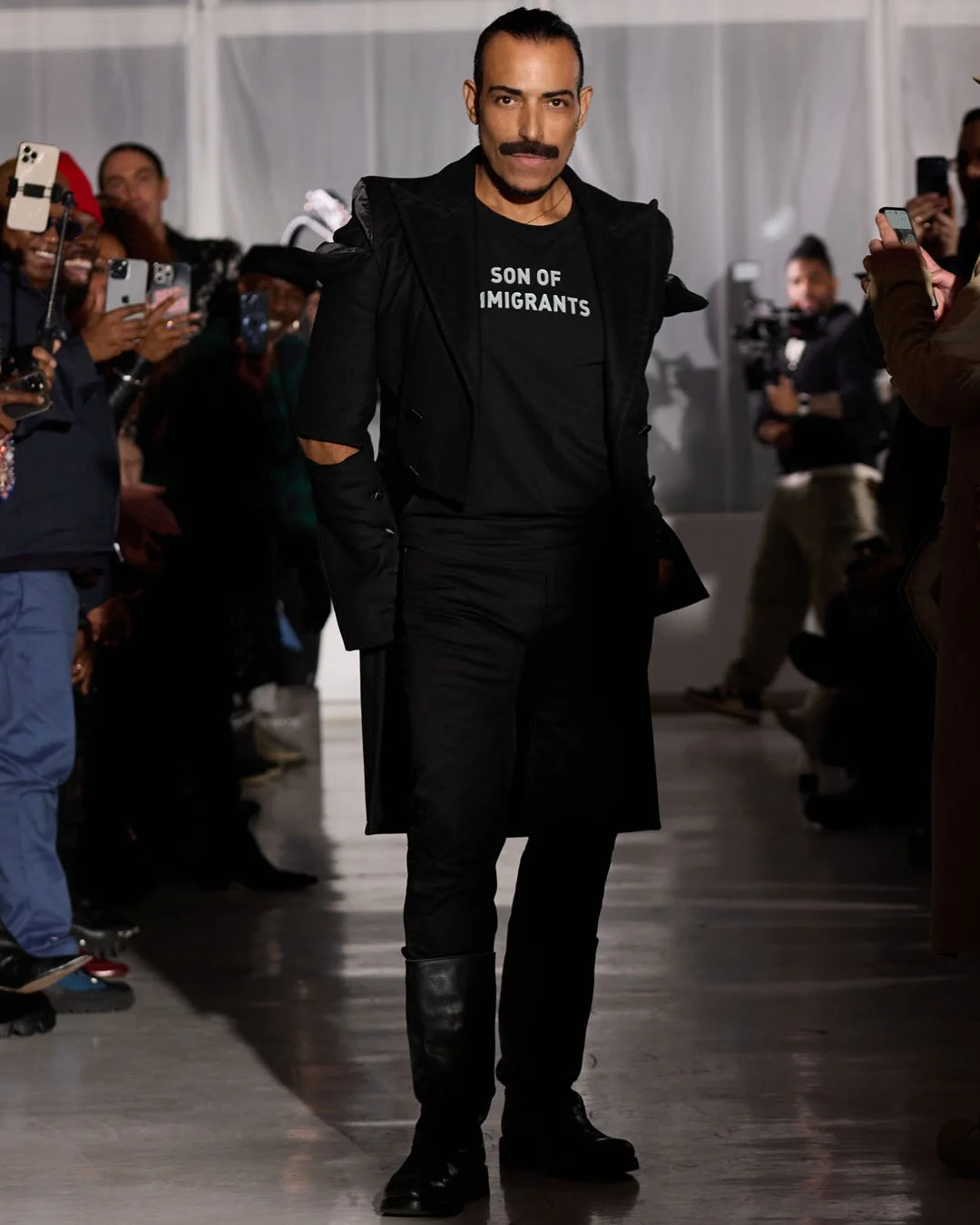
New York–based designer Andre Gerard Michel Jr has spent more than a decade quietly building a fashion label rooted in heritage, inclusivity, and personal expression. Named after his mother’s maiden name, the Landeros brand reflects a philosophy that resists traditional binaries—offering made-to-measure garments designed for anyone drawn to the work. In conversation with Kolor Magazine, Landeros reflects on the evolution of his label, the influence of music on his design process, and why representation and cultural hybridity remain central to his vision.
Photography by Kevin Link
Interview by Nigel Isaiah
KM: If I’m not mistaken, the brand is pronounced Landeros. The name is also very personal. Many people have a complicated relationship with their middle names and don’t always want to share them publicly. What inspired you to name the brand after yours?
Landeros: It's actually my mother's maiden name, not my middle name. I adopted 'Landeros' years ago as an homage to my mother, who is from Mexico, and have used it for my brand and as my artist name. Over time, it became integral to my identity, so building the brand around it felt natural.
KM: You’ve been designing since 2013. When you started the brand, were you always working in an on-demand model, or did you begin the way many designers do—producing seasonal collections?
Landeros: I started with leather bags and accessories. Soon, I decided to launch a full collection and introduce the brand at New York Fashion Week. The brand quickly shifted from accessories to full collections.
KM: What were some of the challenges in moving from accessories into ready-to-wear?
Landeros: The biggest challenge was understanding what I wanted the brand to represent. When I moved into fashion collections, I never really categorized the brand as genderless. That label came later because we were among the first brands in the U.S. presenting collections that naturally spoke to both men and women.
From the beginning, I never really saw design in binary terms. I wanted to create one collection and allow people to gravitate toward it; however, they felt comfortable. I’ve had women wear pieces that might traditionally be considered menswear, and men who found something in the collection that spoke to them because they didn’t see themselves represented elsewhere.
Because of that philosophy, I’ve often shown on the women’s schedule during Fashion Week while presenting looks for both men and women on the runway. For me, the goal has always been to dress anyone who connects with the work.
The other challenge was deciding how to produce the garments. Instead of going the traditional wholesale route, we moved into made-to-measure. Clients come to the showroom, see the collection, and we create the pieces specifically for their measurements. That approach puts us in the category of slow fashion. It’s more labor-intensive, but it allows every piece to feel personal and intentional.
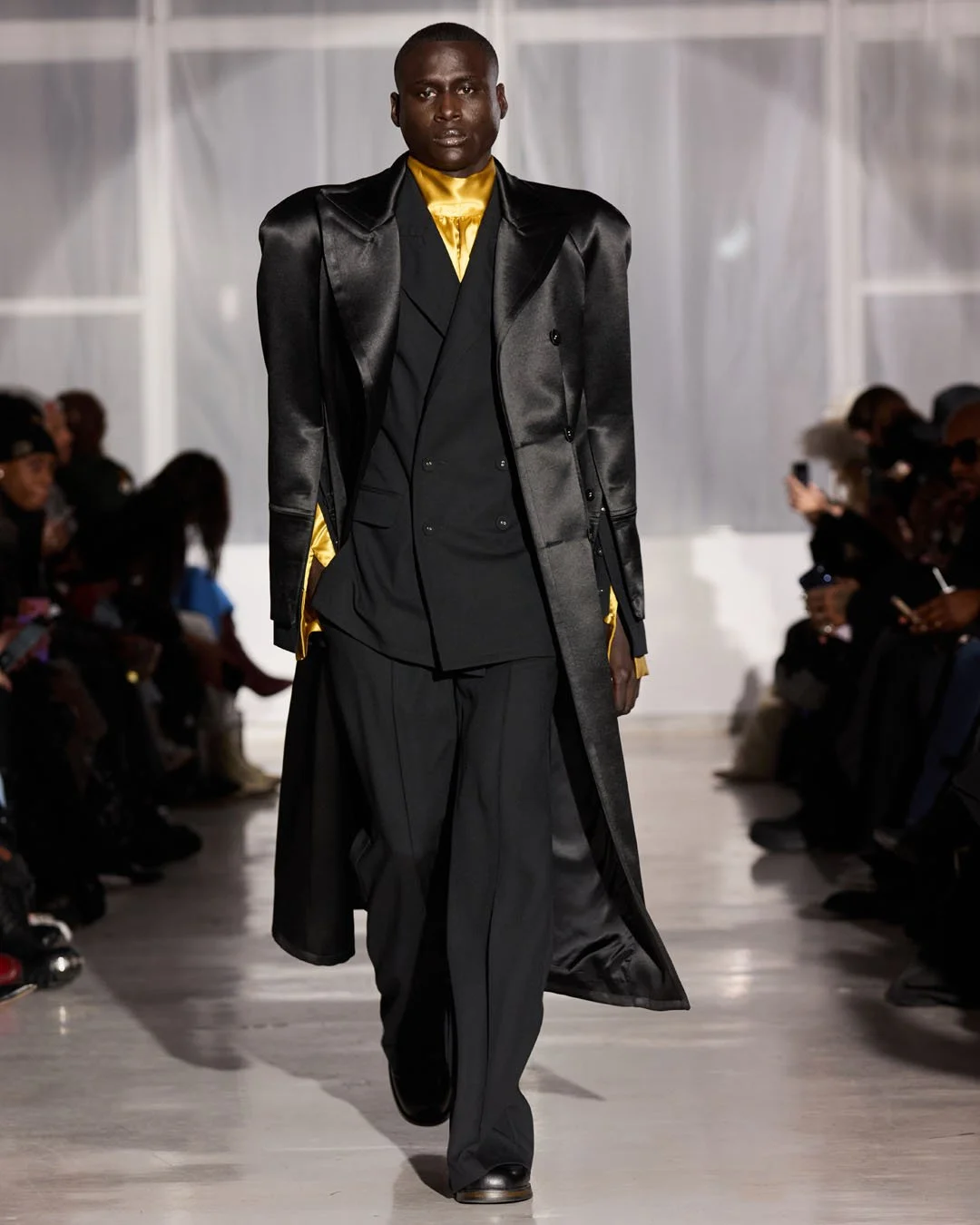
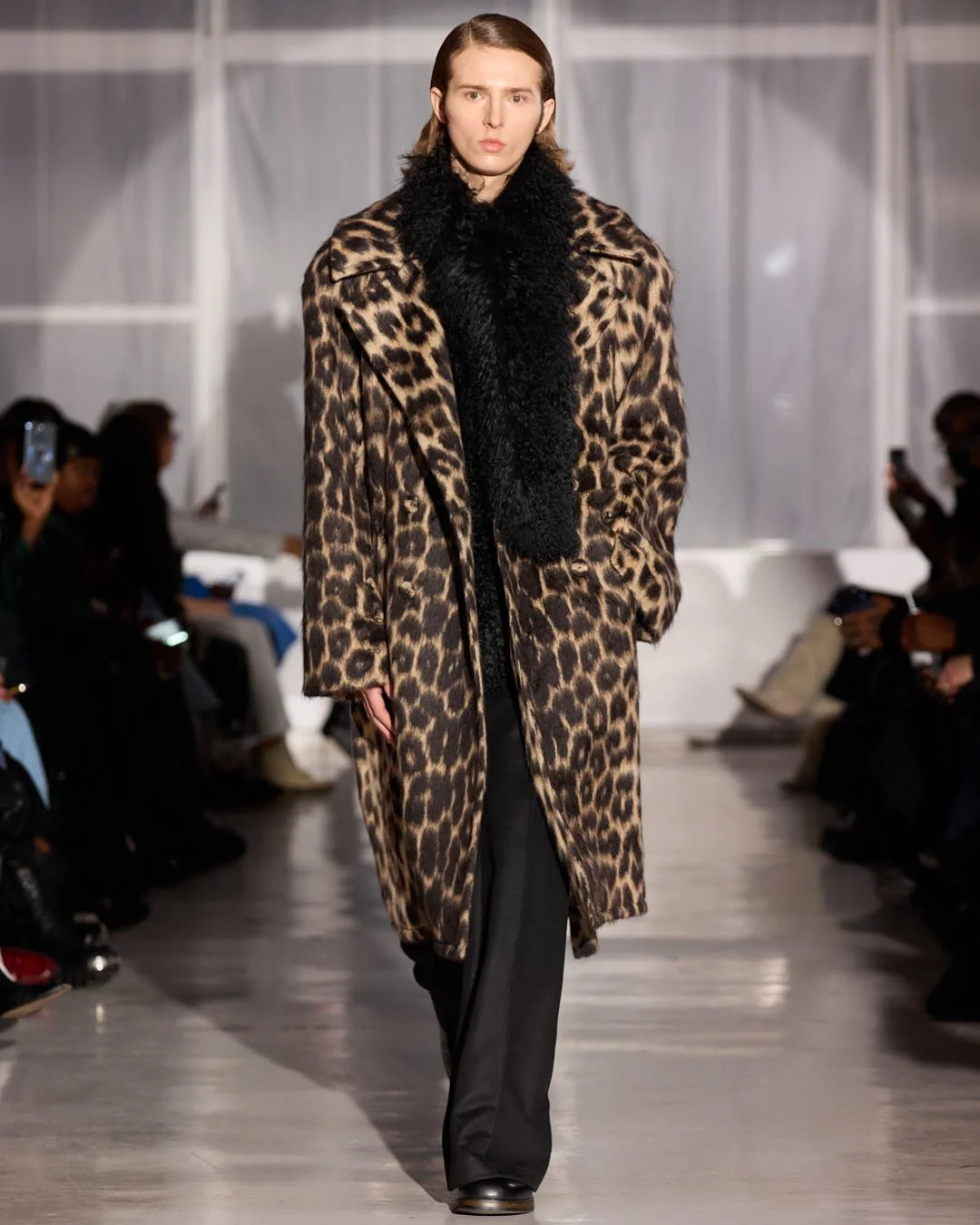
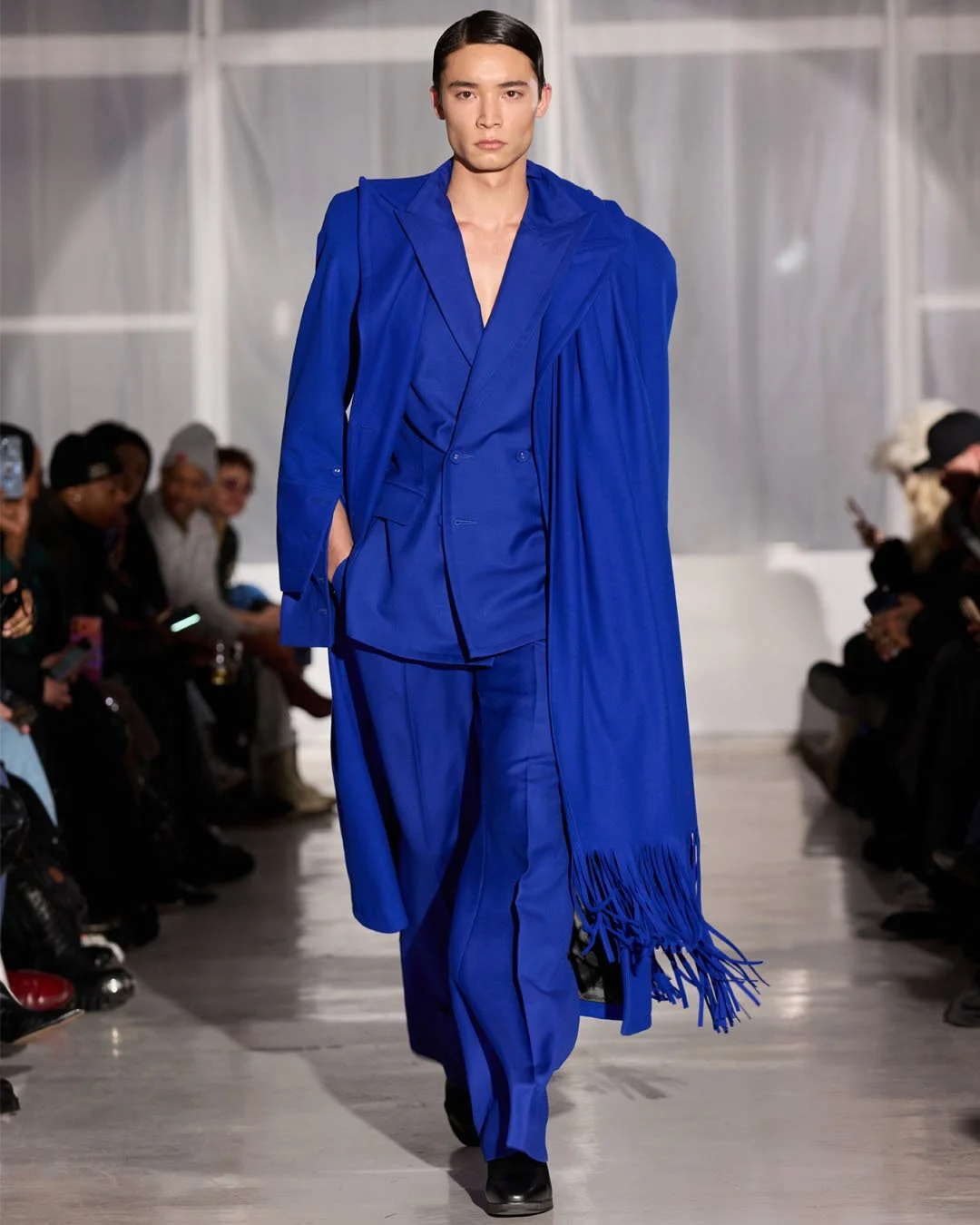
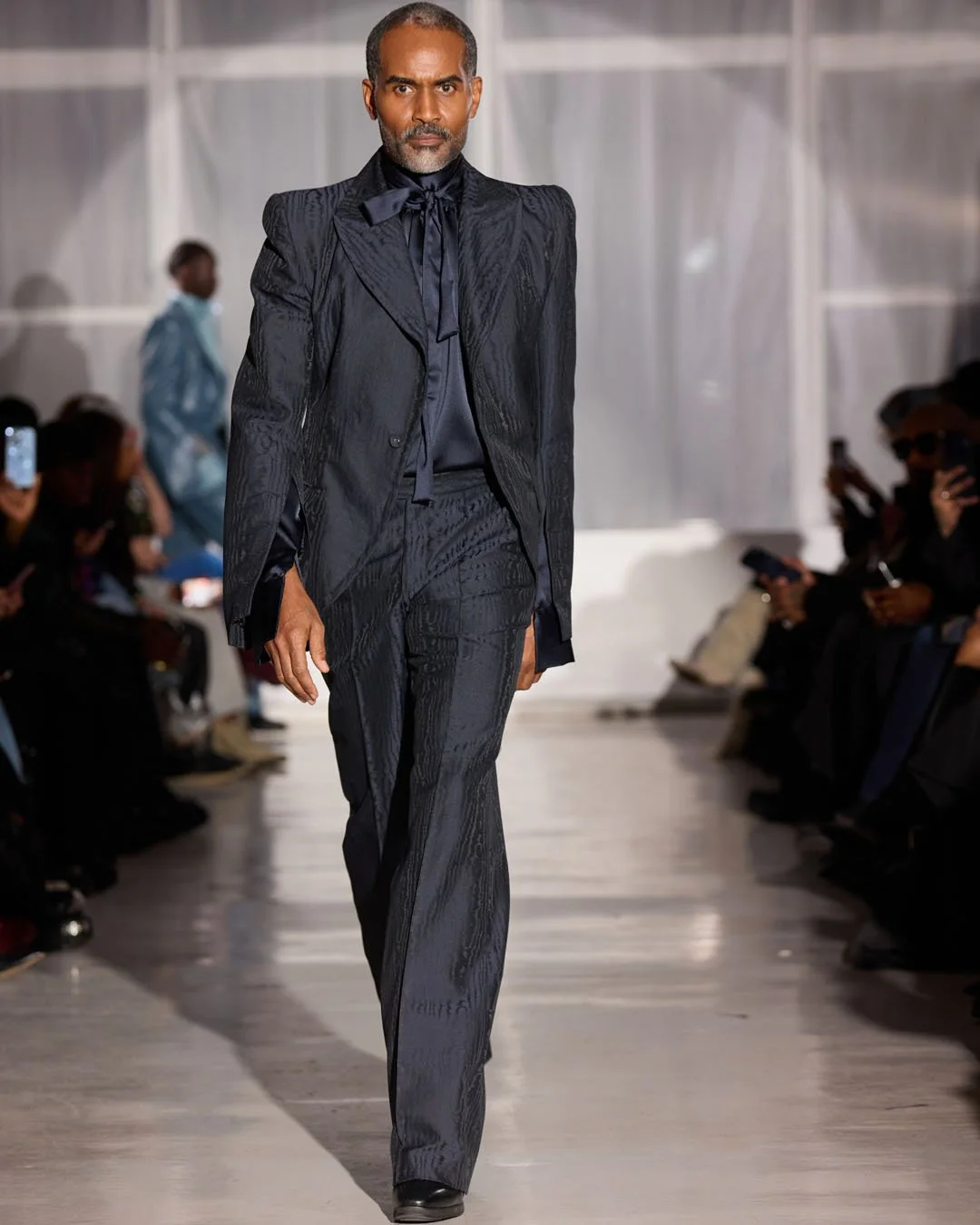
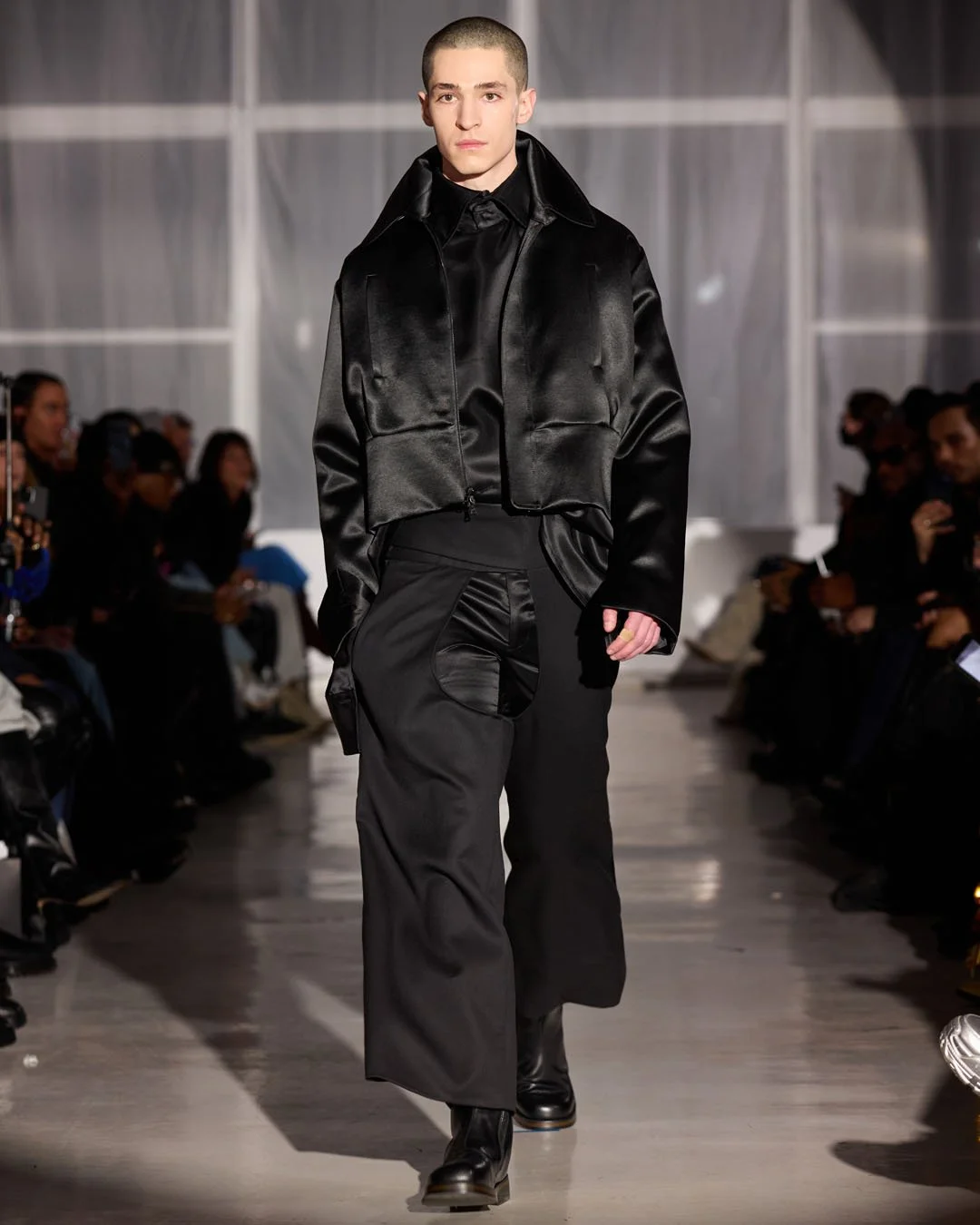
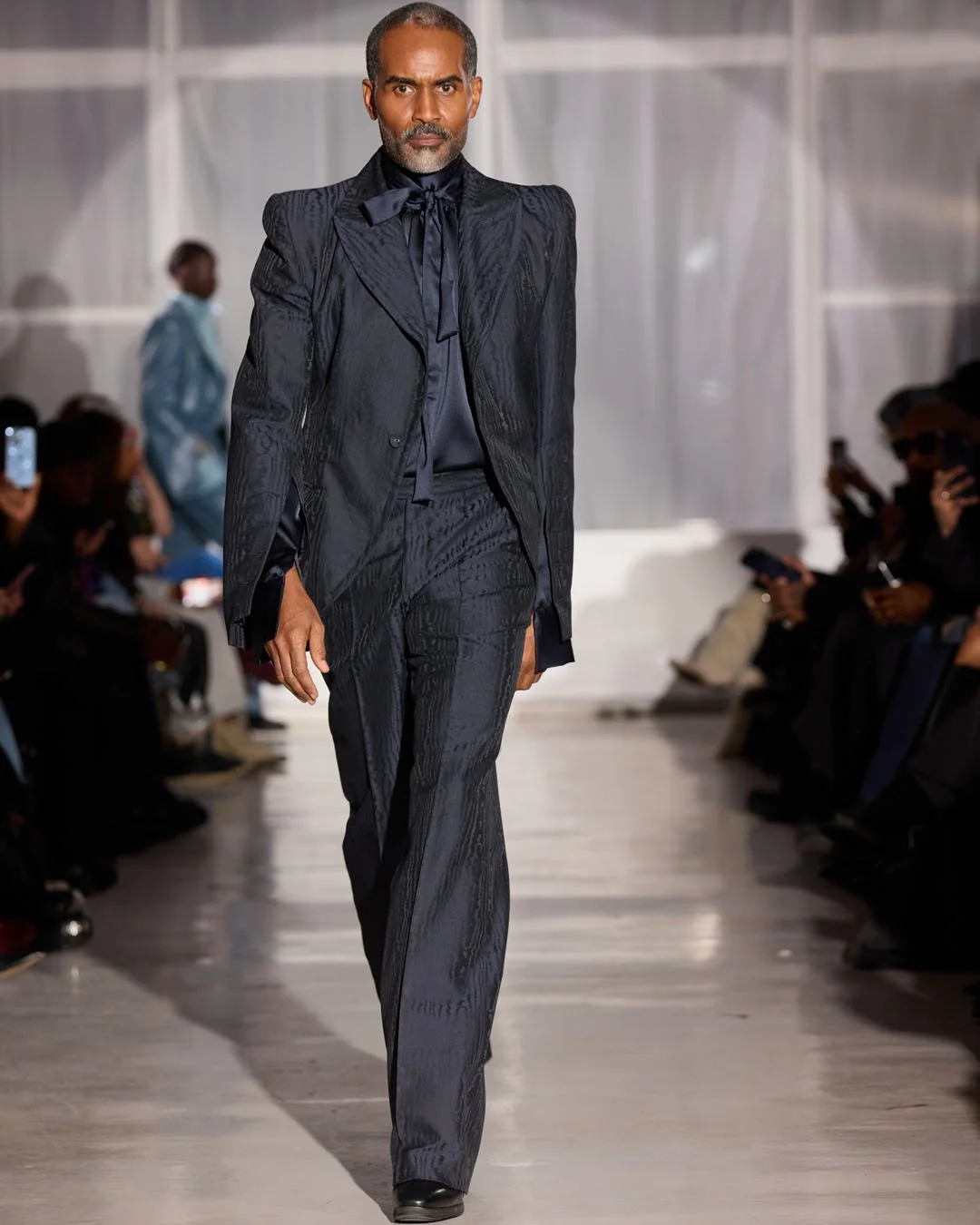
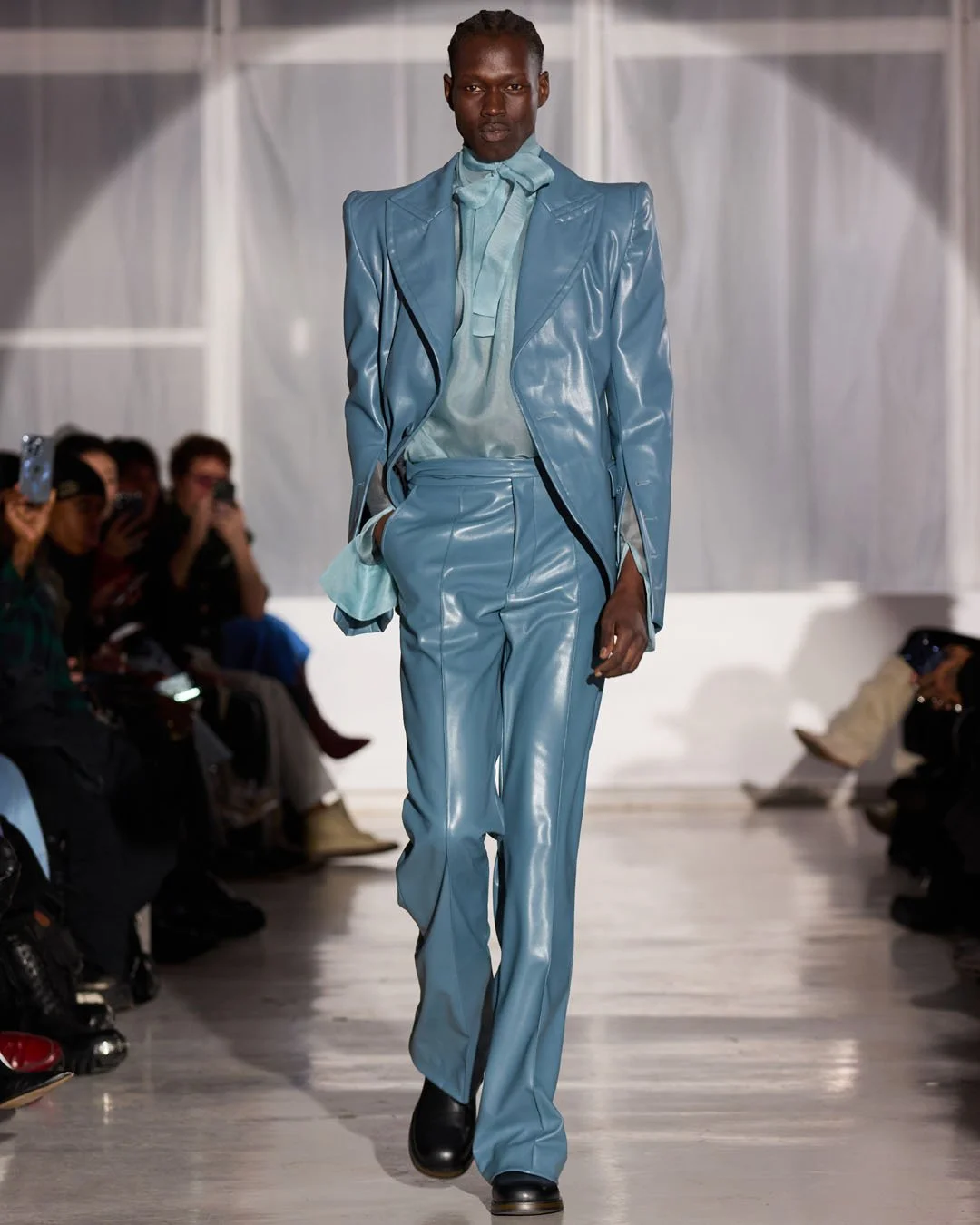
KM: At the show, I noticed several standout pieces—the layered suiting with chaps over the trousers, the cropped jackets, and a leopard coat that really caught my attention. The suit also had this strong ’70s flair. When you begin designing a collection, where do you usually start?
Landeros: It always starts with music. Landeros collections are essentially love letters to music.
If I weren’t designing, I think I would probably be a musician. Music was incredibly important to me growing up. I was born in New York City but raised on an island about an hour outside the city, and music was always the thing that connected me to the world.
I grew up listening to punk, post-punk, and new wave, while at the same time hearing early hip-hop coming out of Queens, Brooklyn, and New York City. I was living at the intersection of those sounds—music from England and Germany alongside hip-hop emerging in America.
Because of that, music still feels like the silent collaborator in every collection. I’ll start listening to something from the late ’70s, early ’80s, or early ’90s, and through that process, the shapes and silhouettes begin to form in my mind. In a way, I feel like I’m designing clothes for the bands I’ve always loved.
KM: You come from a mixed heritage—part Haitian and part Mexican. Today, we’re seeing a wave of designers from the Caribbean and Latin America shaping the global fashion industry, both through their own labels and within European fashion houses. What do you think is driving that energy right now?
Landeros: I think it comes down to the mix. Growing up in a multicultural environment, you’re constantly surrounded by different influences—through food, music, art, and language.
In many cultures across the Caribbean and Latin America, that blending of influences is just a natural part of everyday life. It’s never about one voice; it’s about the combination of many voices.
New York City shares that same energy. It’s one of the greatest melting pots in the world, and I’m fortunate to call it home. When you live in a place like that, you absorb so many influences without even realizing it. That mixture inevitably finds its way into your creative work.
I think designers from those regions understand how to translate culture into design in a very intuitive way, and that’s why the work resonates so strongly right now.
KM: My last question: when you eventually look back on your career, what do you hope your legacy will be—not only as a designer, but as a person?
Landeros: That’s a beautiful question.
Before I moved into fashion, I spent many years working in advertising. When I finally transitioned into design, it felt like I had been given an incredible platform to express my creativity every day. I’m deeply grateful for that.
If I look at the work we’ve done so far, I hope people see that inclusivity has always been central to the brand. Representation is incredibly important to me, especially coming from a mixed background. For our runway shows, casting is something we take very seriously. We work with an incredible casting director, Julius Poole, who is a longtime friend, and together we make sure our shows reflect a wide range of races, ethnicities, identities, and body types—including the LGBTQIA+ community.
I want people to feel seen in this brand.
The other part of the legacy is challenging the idea of strict gender binaries. Our silhouettes often play with masculine shapes for women and softer or more fluid silhouettes for men. For me, those categories are constructs. Clothing should allow people to express themselves however they want.
And finally, I hope people simply have fun with the clothes. Fashion can sometimes become overly intellectualized, but at the end of the day, I want people to enjoy wearing these pieces. I want them to feel empowered, to celebrate their bodies, and to experience joy in the process.
If someone puts on one of my designs and feels confident, expressive, and happy—that’s the goal.