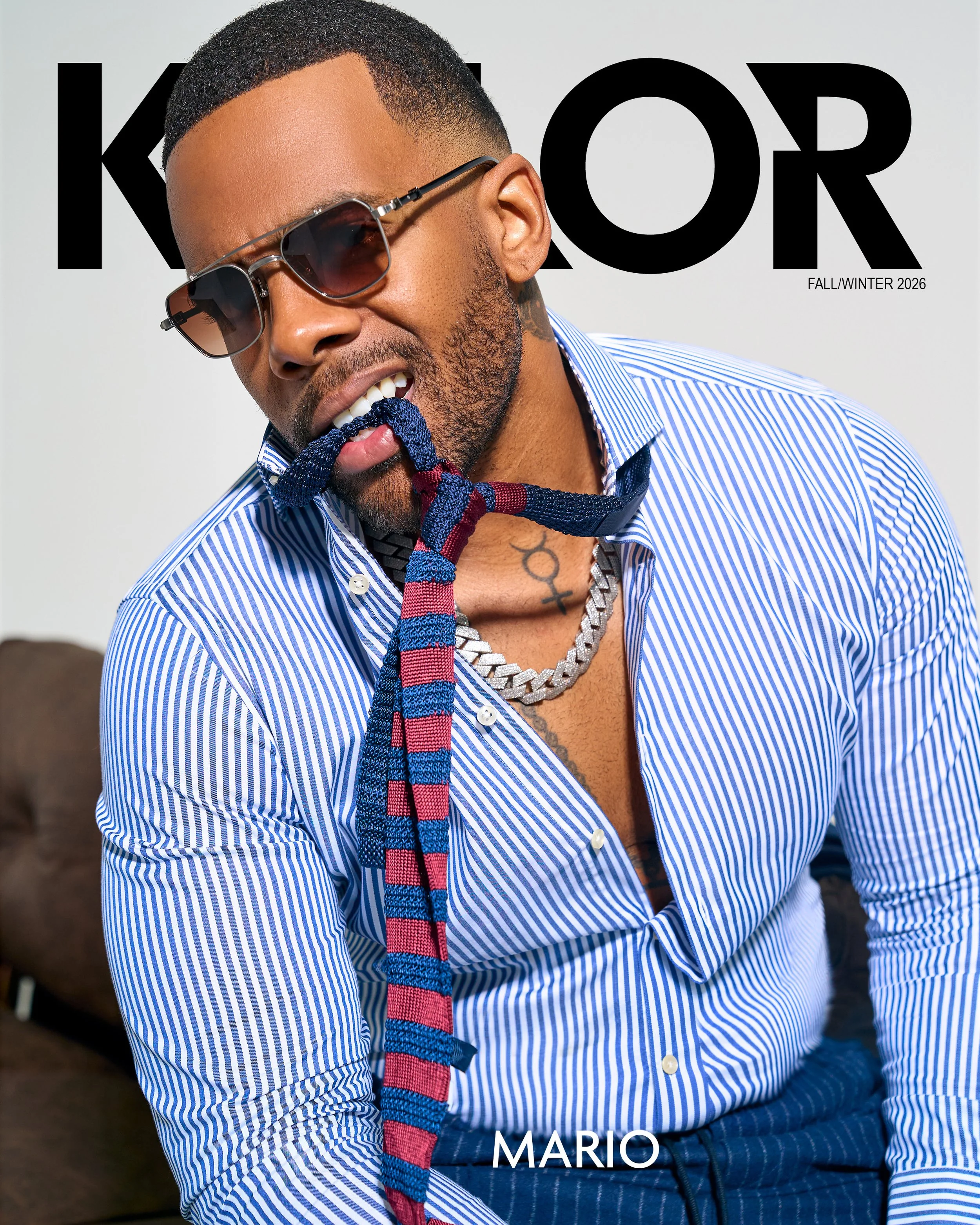
shirt, pants, tie TOMMY HILFIGER, eyewear ROBERT MARC, Mario’s own jewelry throughout.
As a millennial, Mario’s artistry has served as the soundtrack to so many of our lives. As we approach 2027 and the 25th anniversary of his breakout hit, “Just a Friend 2002,” his influence on R&B remains undeniable. But the music that braided a generation’s hair is only the foundation of his legacy. Mario’s evolving understanding of himself has shaped his perspective on life, relationships, and spirituality. Now, with a son of his own, Mario is experiencing personal evolution through an entirely different lens: fatherhood.
“I don't look at children as empty souls waiting to be filled with information. I believe they already arrive with something inside of them. Our job is to create an environment where they can fully thrive.”
Through his experiences, Mario has come to view personal growth as an ongoing journey of loving every version of himself, learning from the past, and remaining open to what the future holds. As he puts it, “Love is creativity. Love is imagination. It’s believing in the best possibilities for your relationships and connections.” In conversation with KOLOR, Mario reflects on the experiences, philosophies, and personal transformations shaping the man behind the music.
Photography: Ammar Thomas
Styling: Nigel Isaiah
Location: The 9 Studios
Special Thanks: The Chamber Group, Cassandre Brissot
KOLOR: First of all, thank you for taking the time. This is exciting for me because I’ve been a fan of your music for a long time.
Mario: Thank you, my brother.
KOLOR: I want to dive right in. You’ve been in this industry since you were very young. When you look back at the version of yourself who first stepped into the spotlight, what do you understand about that young Mario compared to the man you are today?
Mario: Young Mario was a kid who didn’t know anything about the business. I didn’t really have a childhood. I jumped headfirst into an industry where I had to learn quickly, and it demanded professionalism from an early age. I’m also a Virgo, so being a young perfectionist prepared me for who I’d eventually become.
Looking back, all of that artist development made it much easier for me as a mature artist to handle the pressures of this business—the touring, the traveling, the long hours, all of it. I built a strong endurance for it, and now it’s almost second nature. That’s a blessing because when you start young, you get a head start. You spend years sharpening your skills, refining your process, and learning yourself along the way.
Personally, though, there was a lot of pain. My childhood and teenage years were spent working, touring, and living in studios. But I honestly believe all of that was preparing me for longevity. You learn the hardest lessons early. You grow fast. And when you’ve already been through so much, you’re able to navigate this industry with a different level of wisdom.
KOLOR: Speaking of longevity, you’ve lived through multiple eras of R&B. You’ve always made music about love, but the sound of R&B—and even the conversations around relationships—have evolved. How have you stayed connected with the fans who grew up with you while continuing to bring in new listeners?
Mario: I think it’s about taking creative risks. Every project represents a different stage of my growth. You can hear the influences of the artists I grew up listening to, but you can also hear the creative experiences I’ve had with producers and writers I’ve admired over the years.
Some of those collaborators are legends, while others are newer writers and producers, but I’ve always challenged myself creatively. I want to give my fans different sides of who I am—as a vocalist, as a songwriter, and as an artist. Versatility is something I’ve been blessed with, and I never want to stay in one place creatively.
The conversations in my music have evolved too. Sometimes they’re more metaphorical. Sometimes they’re direct. But if you listen through my catalog, every album has its own texture, its own storyline, and its own emotional landscape. I think that’s how you continue to evolve—you keep challenging yourself and you’re never afraid to try something new.
KOLOR: You mentioned the evolution of your music, but how has your own understanding of love evolved over the years? Has making music about love changed the way you experience it in your own life?
Mario: I don’t think the music changes my understanding of love. The music comes from life. It comes from experiences, conversations, relationships, and moments that happen naturally.
Love is something I’m always discovering. There’s always more to learn.
I’ve experienced all kinds of love stories—some beautiful, some traumatic, some light, some dark—and all of those experiences shape the way I write.
If you really listen to my catalog, you’ll hear that.
To me, love is creativity. Love is imagination. It’s believing in the best possibilities for your relationships and connections. It’s giving people the freedom to grow into someone you may not have expected them to become.
Love is freedom.
Love is imagination.
Because I travel so much, I have to stay creative in how I love the people in my life. That creativity naturally finds its way into the music.
Sometimes a song calls for me to write from where I am today. Other times, it asks me to revisit something I experienced five years ago—even if I’m in a completely different place emotionally. That’s one of the beautiful things about songwriting. Your experiences never go to waste. Nothing becomes a regret because you can always create something meaningful from it.
KOLOR: Do you think some of the best R&B comes from pain?
Mario: Absolutely. I think some of the best things come from pain.
I was having a conversation yesterday about this, and I said that pain is almost a necessary ingredient for greatness—at least in my experience. When I look at my own life, I’ve taken my pain, the pressure, the obstacles, and the challenges of this business, and I’ve turned all of that into fuel.
Those experiences sharpen you.
The real question is how you choose to transform that energy. You can’t really escape pain in this world, so it’s about learning how to use it instead of letting it use you.
KOLOR: If pain is part of the process, then what does peace look like to you?
Mario: Peace is like an altar.
I think you have to intentionally create space for your peace.
Happiness is a choice. Joy is an experience. Love is imagination and freedom. And then you have all of these other emotions—pain, love, peace, joy, happiness—they all exist together. The key is learning how to make space for each of them without allowing one to completely consume you.
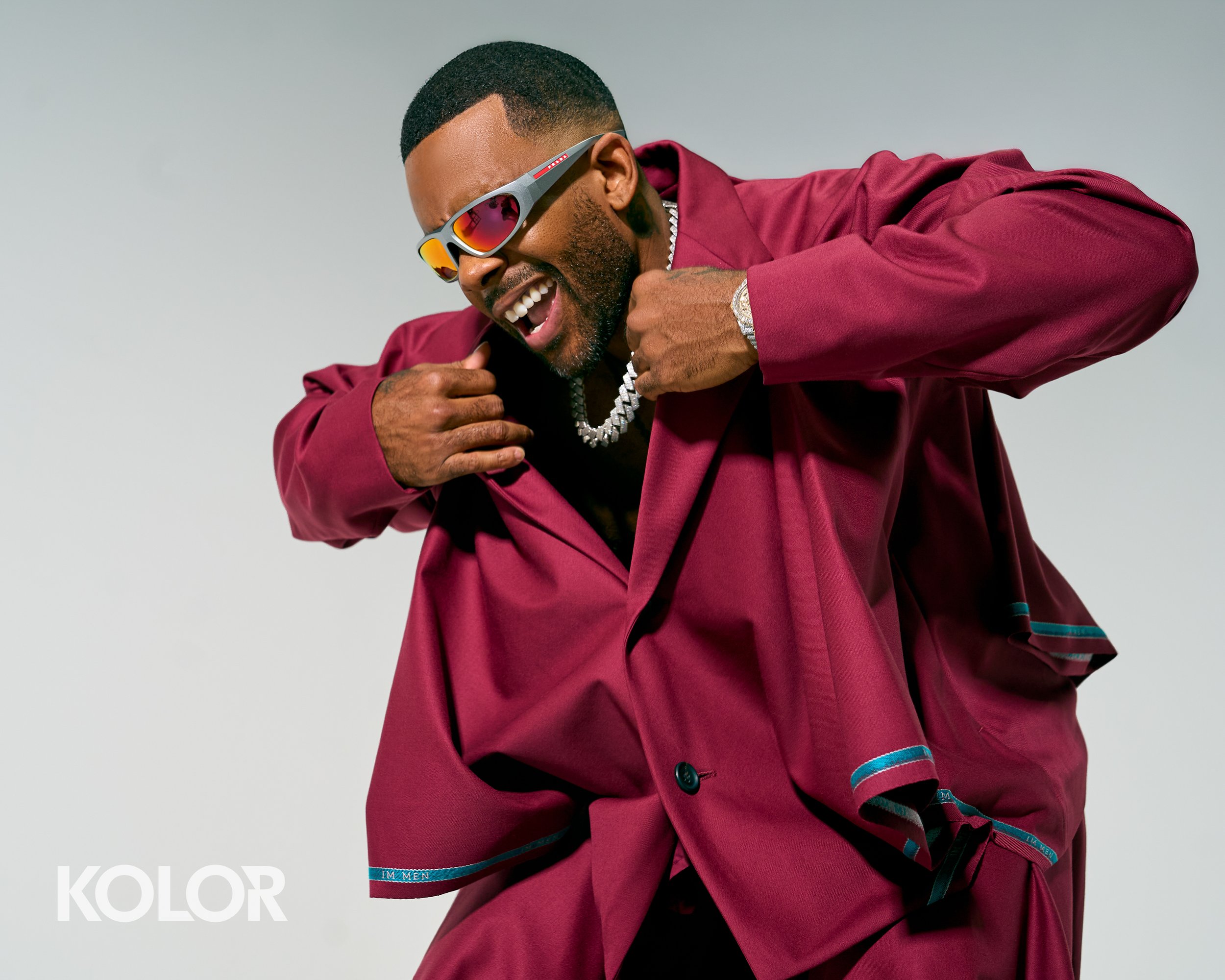
jacket & pants IM MEN, eyewear PRADA
KOLOR: Since this issue is centered around spirituality, I have to ask: What role does spirituality play in your life?
Mario: Spirituality, to me, is the reality you create through your relationship with both the seen and the unseen.
Spirit is the root of spirituality. Spirit is always present. It’s within you. But the question is: How does that spirit manifest in your everyday life?
That’s your reality.
How do you merge your spiritual awareness with your physical life—your thoughts, your actions, your body, your relationships? That’s what spirituality is to me.
Some people approach it from a religious perspective. They follow a specific doctrine or a specific book, and that’s their path.
Others are more spiritually led. They take what they’ve learned, apply it to their lives, and allow their own experiences to deepen that understanding.
For me, spirituality is really about application.
KOLOR: Is there one particular book or philosophy you lean on, or do you allow life itself to continue teaching you?
Mario: I’m a mystic.
So for me, it’s not about one book.
There’s knowledge that’s passed down through reading and study. Then there’s wisdom that comes from experience—cause and effect, trial and error, living life.
And then there’s something even deeper than that: the soul.
Once you begin remembering who you are, you gain access to another level of awareness.
There are different levels of processing reality, and I think all of that comes from your daily practices—what you study, what you absorb, and how you choose to live.
I’ve read all kinds of books.
Being a mystic means you’re willing to study many different perspectives, take what resonates, apply it to your own life, and continue evolving.
For me, it’s about remembering that the answers already exist within me. It’s really a matter of alignment and continuing the practice of coming back to that truth.
KOLOR: You mentioned knowledge being passed down from one generation to the next. Recently, you became a father. Congratulations.
Mario: Thank you. I appreciate that.
KOLOR: Your son is about six months old now, right?
Mario: Yeah, six months.
KOLOR: As a father, what are some of the things you hope to pass down to him?
Mario: I think about it almost like Eastern medicine versus Western medicine.
Western medicine often focuses on suppressing symptoms—shutting things down. Eastern medicine is more about opening pathways and creating balance.
That’s the kind of father I want to be.
I know it’s an unusual metaphor, but I want to help open pathways for my son to become more of who he already is. My role is to provide protection, guidance, and resources so he can fully step into the person he came here to be.
I don’t look at children as empty souls waiting to be filled with information.
I believe they already arrive with something inside of them.
Our job is to create an environment where they can fully thrive.
A lot of us grew up without fathers who were able to provide that space. Because I experienced that myself, I have a much clearer vision of the kind of father I want to be.
More than anything, I want to give him a roadmap.
When life gets difficult, I want him to know there are different ways to respond. There are different ways to navigate challenges.
Of course, growing up in my home, he’ll naturally be exposed to books, ideas, conversations, and different perspectives. Over time, he’ll gravitate toward what speaks to him.
My job is simply to create space.
KOLOR: You touched on fatherhood earlier. A lot of people say becoming a parent makes them softer, more patient, or more intentional. How has fatherhood changed you?
Mario: It’s definitely made me more patient.
More empathetic.
More selfless.
And I think it’s made me more observant when it comes to love. Love is already there—you just experience it differently once you become a parent.
Those are probably the three biggest changes.
I also think about him whenever I make decisions now. Whether it’s scheduling, work, or travel, he’s always in the back of my mind.
When I’m home, my schedule is much more structured than it used to be because I want to maximize every moment with him.
And one thing fatherhood has definitely taught me is that I don’t need nearly as much sleep as I thought I did. (Laughs.)
KOLOR: (Laughs.) As a father myself, I can definitely relate to that.
You’ve been in this industry for a long time. Between touring, recording, fatherhood, and everything else you’re balancing, how do you stay grounded?
Mario: Being grounded has become part of my daily practice.
It starts with understanding why I’m in a particular space and what I’m there to accomplish.
Knowing your purpose is a big part of staying grounded because it keeps you aligned with what you’re supposed to be doing—not just that day, but in the long term.
When your daily actions are connected to your bigger vision, it’s easier to stay centered.
Fatherhood has helped with that too.
Having a child forces you to see life for what it really is. There’s no escaping what’s truly important anymore.
KOLOR: I love that.
Let’s switch gears for a little fun.
If someone who couldn’t sing at all wanted to perform one of your songs at karaoke, which song should they choose—and which one should they absolutely avoid?
Mario: (Laughs.) Don’t sing “How Could You.”
Definitely don’t do that.
Honestly, I’d say “Just a Friend 2002.” I feel like that’s one of those records everybody can sing.
It’s simple.
Even if you don’t have the greatest voice, if you’ve got the cadence, you’re halfway there because the crowd is going to sing with you anyway.
KOLOR: So that’s your recommendation?
Mario: Either that or “Let Me Love You.”
Just don’t make it all the way to the end.
(Laughs.)
Once you get to those higher notes at the end, let the audience take over.
At that point, you’re performing more than you’re singing.
KOLOR: (Laughs.) Fair enough.
What’s one misconception people have about Mario?
Mario: That’s a tough one because, honestly, I don’t spend a lot of time thinking about what people think of me.
KOLOR: Before today, I probably would’ve said that you seem like a very serious person.
Mario: I can understand that.
KOLOR: You always seem focused. Even going back to Verzuz, you carried yourself with a certain seriousness.
Mario: Yeah, I can see why people would think that.
I do take my work seriously.
But I’m actually pretty laid-back.
I joke around a lot.
I say things people don’t expect me to say.
You’d have to spend time around me to really see that side because it’s not always what people expect.
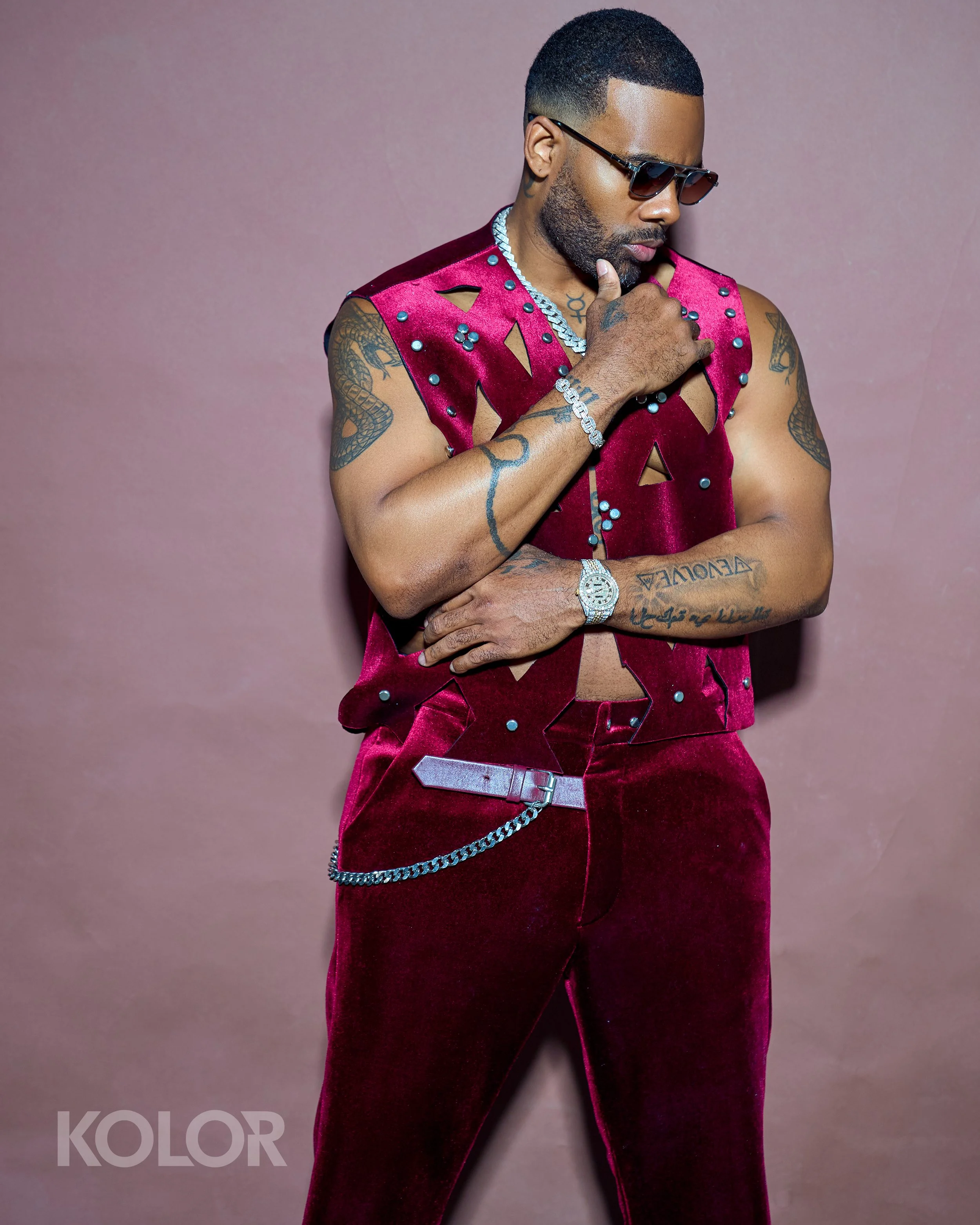
Mario’s own tour look
KOLOR: Speaking of Verzuz, how did you look back on the moment when you slipped on stage?
Mario: (Laughs.) Honestly, I laughed about it as soon as I walked offstage.
I was cracking up.
I couldn’t believe it happened.
To be honest, I was just grateful it wasn’t worse because falls can go a lot of different ways.
Sometimes you can’t control how you’re going to land.
Luckily, I spun out of it, got back up, kept singing, and the crowd stayed with me.
Honestly, I expected people to go way crazier with it online.
I thought I was going to end up all over memes and AI videos.
Thankfully, it never got to that level.
KOLOR: Fashion is a huge part of what we do at Kolor Magazine.
What’s one fashion choice you’ve made that had you questioning yourself afterward?
Mario: (Laughs.) Maybe what I wore today.
The Balenciaga boots with the Issey Miyake look…
At first I looked at it and thought, “I don’t know about this.”
But then I saw it on camera and thought, “Nah… I actually like it.”
KOLOR: What about in everyday life?
Mario: Honestly?
Sometimes I wear the wrong textures for the wrong temperatures.
I’ll put on this incredible sweater that I love…
…and then realize it’s ninety-five degrees outside.
(Laughs.)
I’ll end up at an outdoor event thinking, “Bro… what are you doing?”
Sometimes you just grab the easiest outfit in your closet without thinking about where you’re actually going.
KOLOR: We’re going to do a quick word association. I’ll say a word, and you tell me the first thing that comes to mind.
Mario: Let’s do it.
KOLOR: Baltimore.
Mario: Trenches.
KOLOR: Fatherhood.
Mario: Evolution.
KOLOR: Love.
Mario: Imagination.
KOLOR: Faith.
Mario: Destiny.
KOLOR: If you had to describe the current era of Mario in one word, what would it be?
Mario: Inclusive.
KOLOR: Why “inclusive?”
Mario: Because I feel like I’m embracing every part of who I am now. Every experience, every lesson, every version of myself has a place. Nothing is separate anymore. It’s all part of the same journey.
KOLOR: Let’s end with a lightning round. No overthinking—just go with your first instinct.
Mario: (Laughs.) Alright.
KOLOR: Michael Jackson or Prince?
Mario: Michael Jackson.
KOLOR: That was quick.
Mario: (Laughs.) Yeah.
KOLOR: Stevie Wonder or Luther Vandross?
Mario: Stevie.
KOLOR: Beyoncé or Rihanna?
Mario: Beyoncé.
KOLOR: Early 2000s R&B or ’90s R&B?
Mario: Right now? ’90s R&B.
KOLOR: Maxwell or D’Angelo?
Mario: Whew… that’s a good one.
I’m going to say D’Angelo.
I know some people might disagree, but… rest in peace to the legend.
KOLOR: Comedy or action?
Mario: Comedy.
I need to laugh.
KOLOR: Sneakers or hard-bottom shoes?
Mario: Sneakers.
KOLOR: Since you’re still adjusting to fatherhood, I’ve got one more for you.
All-day diaper duty or handling the nighttime routine?
Mario: (Laughs.)
I’ll take diaper duty all day.
At least during the day I can still get some work done.
When you’re exhausted from being up all night…
Work isn’t nearly as fun.
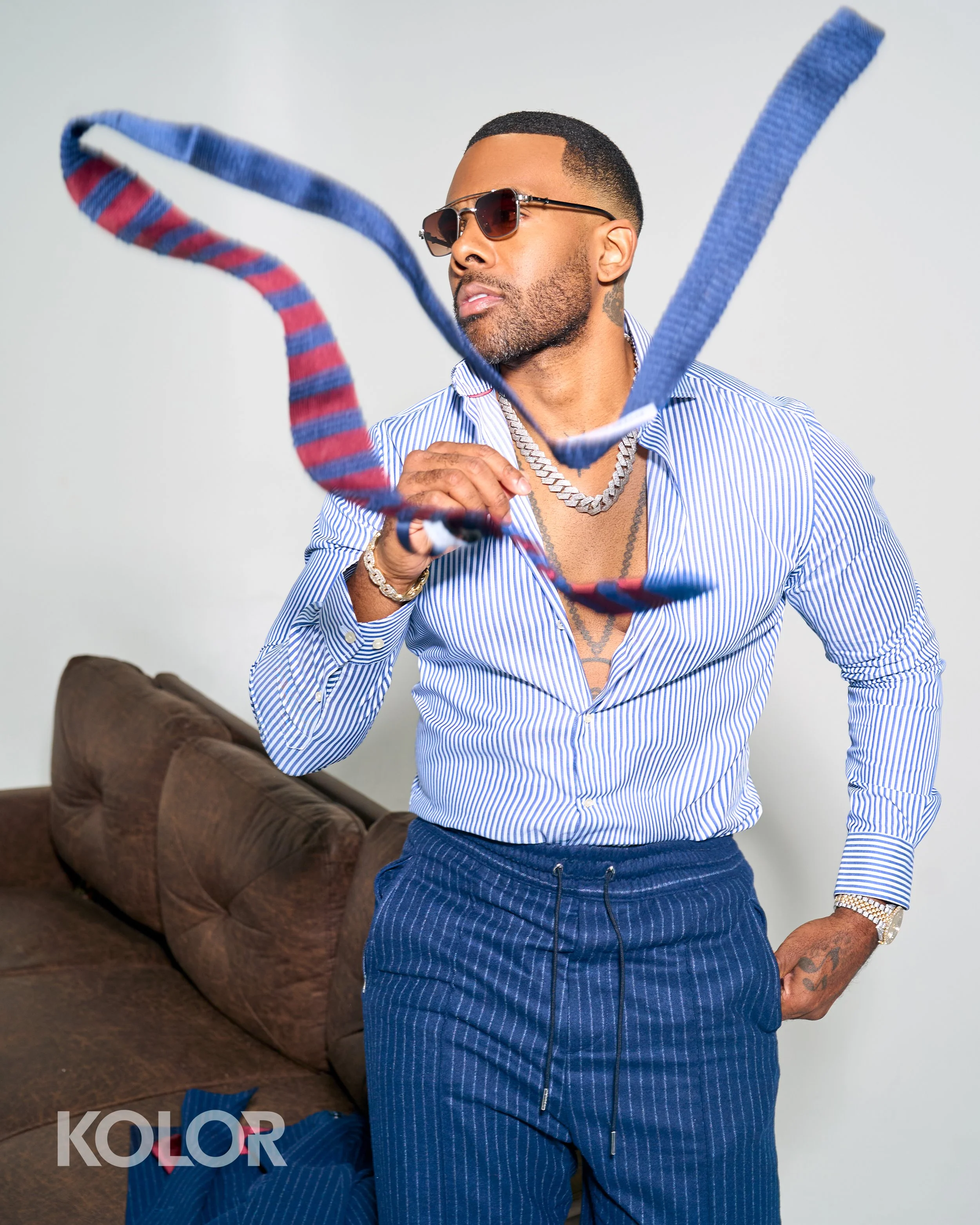
shirt, pants, tie TOMMY HILFIGER, eyewear ROBERT MARC, Mario’s own jewelry throughout.
KOLOR: Last one—and you have to answer it.
Usher or Chris Brown?
Mario: Man…
That’s tough.
(Laughs.)
That’s really tough.
If I absolutely have to answer…
I’m calling it fifty-fifty.
I’ve had the opportunity to watch both of them perform, and they each have something that’s uniquely theirs.
Chris is my brother, and I’m a huge fan of his on a whole different level.
But when you’re talking about R&B, performance, and catalog…
You have to respect them both.
They’re both kings in their own right.
KOLOR: I think that’s the perfect way to end it.
You survived the Kolor lightning round.
We really appreciate you taking the time to sit down with us. It was a great conversation, an incredible shoot, and we wish you continued success in everything that’s ahead.
Mario: I appreciate it, brother.
Thank you.
It was great talking with you.
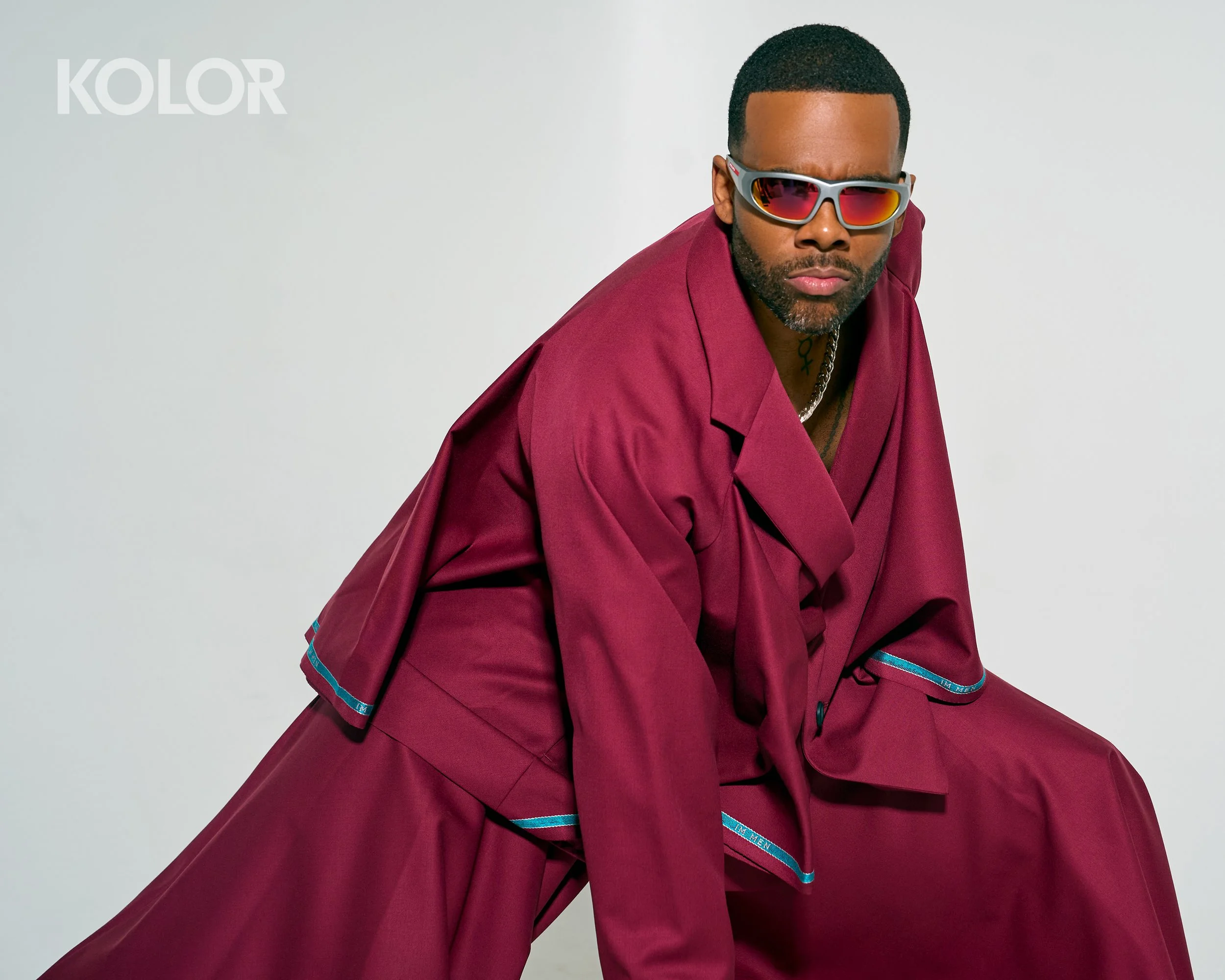
jacket & pants IM MEN, eyewear PRADA