Hotdog Bouillabaisse: How Did I Get Here
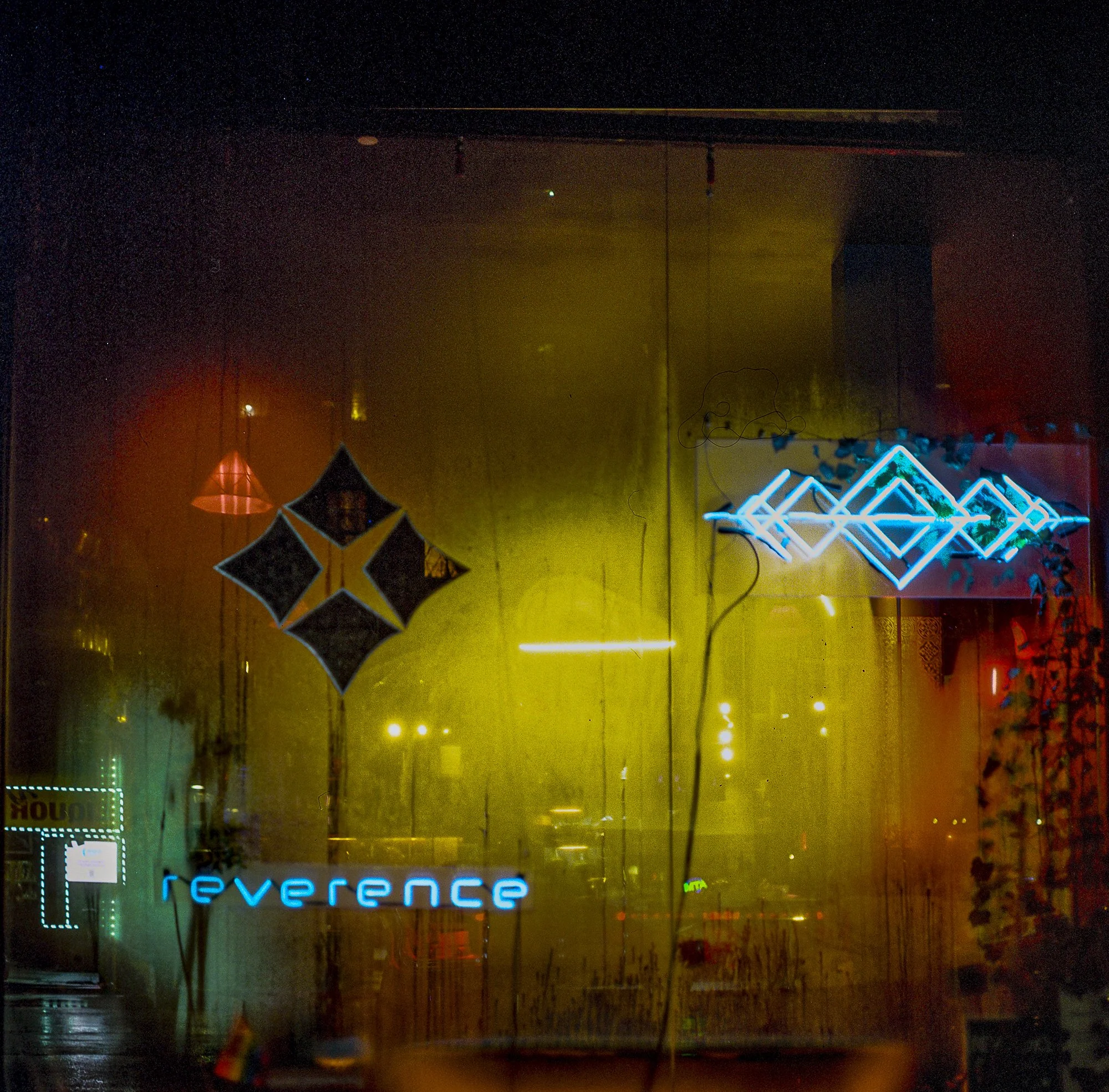
It was the last night. Six years of service, six years of building something I had a name for before I had a room for it, and here we were. The restaurant was full. The kitchen was running. Somewhere in the middle of all of it, a woman appeared at the door. She asked what we were. I approached her the way I always did with questions at the door, with whatever humor I could find at the end of a long week, and said, “Where ya been the last six years?” Then I explained what Reverence was and what it had tried to be. I told her it was our last night. I offered her a seat. She had somewhere to be. She apologized and left. Later that evening, as we were breaking everything down for the last time, she came back. She had a gift for me and my family. She said we would be missed. That she was upset we wouldn’t be there anymore. I cried. I have been trying to fully put my arms around that moment ever since. To realize you have actually accomplished the thing you set out to do — and to have a stranger hand you proof of it on your last night — is something else entirely. How did I get here. * I was born in Los Angeles in 1963. I grew up in a middle-class Afrocentric neighborhood in Southern California, then later in Pacific Palisades, a predominantly white beach community. I learned early what the world thought of me. At 14, an Italian girl I had fallen in love with invited me to dinner to meet her family. I was told I was not welcome in their home and was never allowed to see her again. That was an awakening. It was not the last one. In 1992, at 29 years old, I opened Russell’s in Los Angeles, rated among the top restaurants in the city. I built that without institutional support, without mentorship, without most of the rooms that were supposed to teach me ever letting me through the door. Every year that restaurant stood was proof that the work was enough, with or without the industry’s attention. That proof needed a different kind of platform. In 2004, I launched SubCulture Dining. Not a concept. Not a brand play. A decision. The work would make its own space, on its own terms, outside of any permission structure

Underground dinner series. No press, no photography, no applications. Locations shared only in the final window before service. The food and the experience as the only argument. That platform has now run continuously for twenty-four years, and what it has built is something I will come back to in a moment.
In 2009, I opened Lafitte in San Francisco. Michelin recognized it. Zagat listed it. Both books. Michelin has never sent me the placard they send to recognized restaurants. Not once across two separate acknowledgements. I’ll let that sit there. Between 2013 and 2017, I did television. Food Network and NBC/ Bravo. I understand the machine now in ways I did not going in. That is a subject for another column. On August 8, 2019, a few months after my son Bowie was born, I opened Reverence in Harlem. Fine dining, chef-owned and operated, in a community where that essentially did not exist. The most historic block in Harlem, inside a 150-year-old landmark building. I built it there deliberately. Broader recognition did not arrive until the social justice reckoning following the murder of George Floyd forced the industry to confront what it had long deferred.
Reverence closed February 15, 2025. How did I get here. * Activism was not something I discovered during the pandemic. It is structural. It runs in my family. My father was Dr. Russell T. Jackson. Lieutenant Commander, United States Navy. He served at Balboa Naval Hospital, was Executive Officer attached to the 3rd Marine Division in Vietnam, and oversaw the opening of MASH units in Phu Bai and Chu Lai. He was the first African American to intern at Atlantic City Hospital. The first to enter the UCLA-Harbor Medical Center anesthesia residency program. The first African American president of the Los Angeles County Society of Anesthesiologists. The first African American president of the California Society of Anesthesiologists. The State of Israel honored him with the David Ben Gurion Award for his lifetime contributions to medicine.
He was an expert witness before state and national legislatures on health policy. He helped build MICRA, the medical malpractice reform legislation that still governs California, signed into law in 1975. He was the movement’s leader and its spokesman. His name is not in the documentation. The work is there. The record is not. Nobody hands you a coat like that. One day you look down and realize you are wearing it. The boards, the testimony, the writing, the advocacy, the standing up for the people in this industry who built everything and got credit for nothing — I did not decide to do any of that. It arrived the way it arrived for him. Out of what I could not walk away from. My son is watching what I do with what I have been given. I think about that. My father showed me by doing. I intend to do the same. * I came up the way a lot of young cooks did in the late seventies and eighties. Stages. Word of mouth. One kitchen passing you to the next. There was no mentorship. Nobody pulled me in. Every piece of knowledge I acquired, I extracted myself. Always on the outside, until the places that put me in the fire learned quickly that I was not the person to underestimate. That resistance shaped the conviction I bring to every plate. It was not a detour. It was the education. In 1985, Wolfgang Puck offered me an opportunity at Spago. Mark Peel was the sous chef. He said no.
Four years later, in 1989, I attempted to stage at Campanile, Peel’s own restaurant by then. My father was a regular there and got me the interview himself. Peel turned me away again. No explanation either time. I did not need one. Also in 1989, I got the opportunity that actually opened something for me: Michel Richard at Citrus. I became a saucier there. Richard gave me a real opportunity, and I took everything it offered. That kitchen is where I understood what it meant to work at that level when someone actually let you work. It confirmed what I already knew. The problem was never the cooking. How did I get here. * I learned something else during those years. Not in a kitchen, but in a small apartment in San Francisco. I had met Meredith Brooks in Los Angeles after the 1989 earthquake. She was on tour with a band called The Graces. We started talking, and I knew immediately I wanted to know her better.

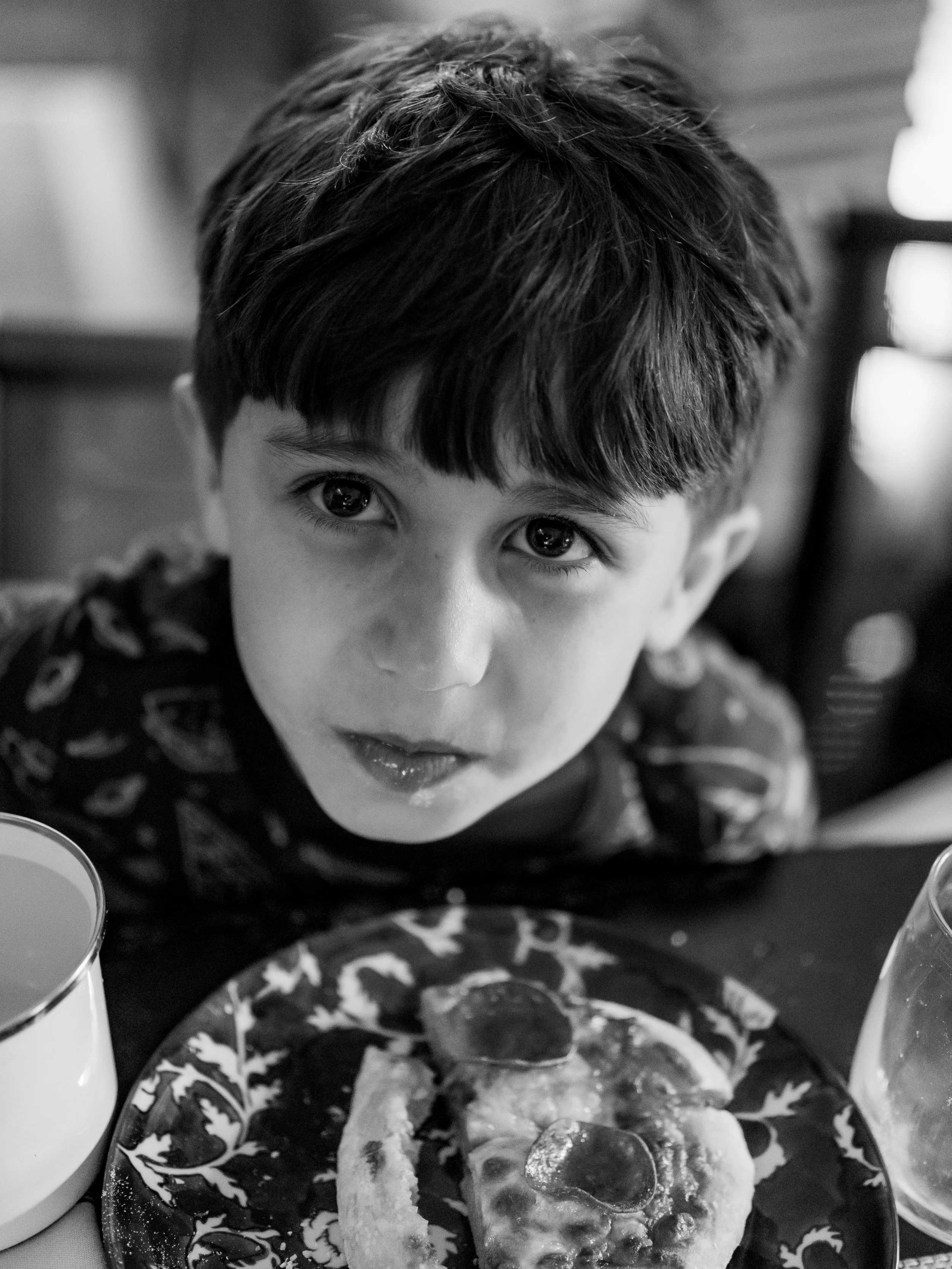
The tour was coming through San Francisco. I did the only thing I knew how to do when I wanted to be honest with someone. I invited her over early and cooked for her. The apartment was tiny. The meal was intimate. There were moments during that dinner — passing each other in the small space, handing something across the counter — that were utterly electric. That dinner set us off on a marriage. I understood something after that. This was not just cooking. This was a different kind of language. And I had it.
After the divorce, I fell hard for someone else. Cooked for her. Intense evening. The relationship never became what I wanted it to be, but that night confirmed everything I already suspected. It also introduced a new awareness: this thing I could do was not casual. The intimacy a meal like that could create demanded that I be careful with it. There is a difference between cooking for a room full of people and cooking for one. Both matter. They are not the same. Then there was Jen. That relationship was everything, and it ended in the kind of heartbreak that takes years to climb out of. When it was over, I stopped cooking for dates entirely. I could not go back to it. I did not want to. I did not cook for Lora until well into our relationship. When I finally did, it was simple. Intentional. And it meant everything.
What I know now, sitting at the table with my son and my wife, those thirty or forty-five minutes we get in the middle of whatever the world is throwing at us, is that this is the whole argument. This is why the work exists. I want that for every person who sits down at one of my tables. Not a performance of hospitality. The actual thing. The grounding. The love. The few minutes where everything else stops and you are simply here, with the people in front of you, and the food is the reason. That does not change. The locations change. The rooms change. What I am trying to give people does not. How did I get here. * Dominique Crenn and I go back further than most people know. She held her underground restaurant at Lafitte SF before Atelier existed.
I trained at Atelier Crenn preparing for Iron Chef. I backed her up in the kitchen in the early years when she traveled for television. That kind of working relationship, built over years in each other’s spaces, creates a different kind of clarity. Dominique is one of the most conscious practitioners working today in the way she translates source material to plate — poetry, memory, place, conviction. Watching that process from the inside forced a recognition in me. I had been doing the same thing my entire career without the language for it. Music. History. Culture. Politics.
My upbringing. The communities that shaped me. The past I was always trying to bring forward into the present tense. That was always the cooking. I just had not seen it clearly enough to say so. I met Dominique at a SubCulture Dining dinner. We are family now. The alignment in how we see food and the world is that precise. That the platform I built on my own terms is where that conversation began is not lost on me. SubCulture Dining has now run for twenty-four years. What it has produced goes beyond any measurement the industry has for value. The table keeps doing what the table has always done. It turns guests into family. * I built Reverence with homage at its foundation.
For the path that got me there. For the fact that I had built it without anyone handing it to me, without the mentorship that was supposed to be part of the path, without waiting for institutional validation that kept arriving for other people while I was in the room doing the work. Some of my best memories from those six years are not the most celebrated nights. Not the reviews. Not the packed rooms. Some of my best memories are the nights I got to sit down with my family and eat dinner together at Reverence. The meals at home now, at the table with my son and my wife, are the most important moments of my life. None other. That is what I was trying to give people. The thing itself, not a version of it.
How did I get here.
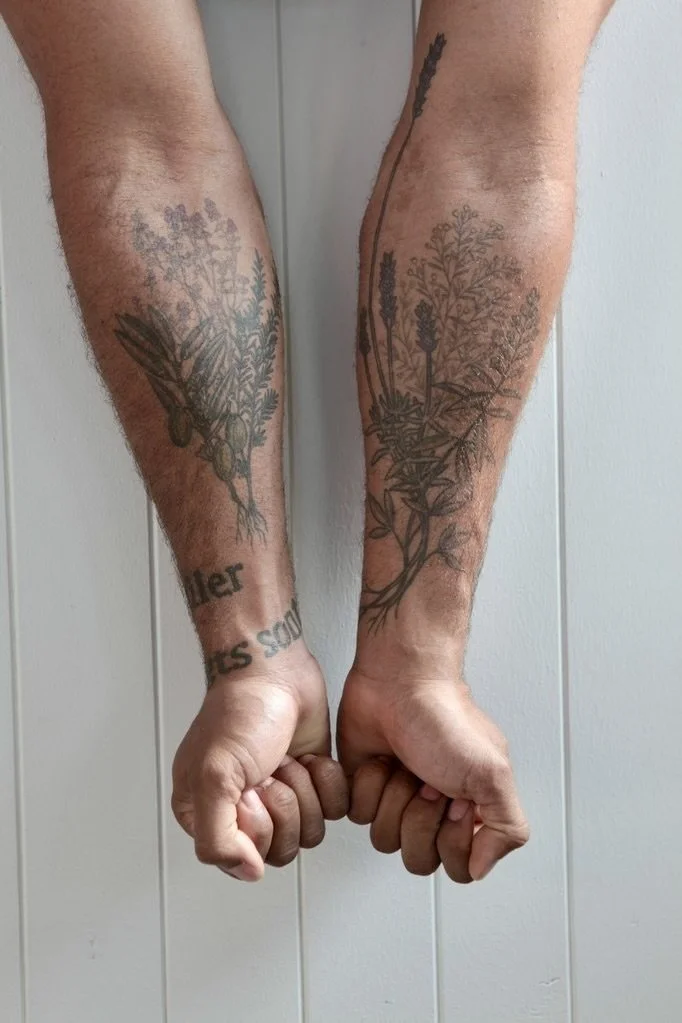

The story of food in this country has been told incompletely, and I am in a position to help correct it. In February 2024, the Museum of Food and Drink opened “African/ American: Making the Nation’s Table” at The Africa Center in Harlem — an exhibition built around the argument that African American food is American food. Reverence was a featured restaurant on opening night, feeding people in the community where we had operated for six years. My name is not on that page. I offer that not as complaint, but as documentation. It is exactly the kind of thing this column exists to make visible.
African American food has been collapsed into a category called soul food or Southern cuisine, as if the entirety of Black culinary contribution to this country fits into a single drawer. That is not history. That is a filing system. American cuisine is the work of every immigrant community, every Indigenous tradition, every pair of hands that fed this country across four centuries. Mexican and Central American. Korean and Chinese. Italian and French. Caribbean and Indigenous and African. Food is not color. It is the work of people who care enough to feed other people well under every condition imaginable. What the industry calls luxury, someone else once called survival. The preserved meats. The whole animal. The fermented and brined and slow-cooked dishes that now carry prix- fixe prices in Michelin-starred dining rooms — many of these techniques were born from necessity.
Born from the ingenuity of African American cooks and enslaved people forced to create brilliance from limitation. Born from immigrant communities carrying tradition into unfamiliar places. Born from Indigenous food knowledge that predates every restaurant group now placing it on a tasting menu. Who grew it. Who carried it. Who figured out how to make it beautiful under impossible conditions. Who built the tradition someone else later got celebrated for continuing. California cuisine is what I cook. It has always been Black, Brown, immigrant, and working-class at its foundation. The Korean, Chinese, Japanese, Italian, French, Mexican, and Central American influences running through it were not accidents of geography.
They were the work of specific communities, specific people, specific hands. The industry spent decades assigning that authorship elsewhere. I was told to stay in my lane. Cook soul food. As if that were a limitation rather than a lineage. As if forty years of training, technique, and hard-won experience were supposed to collapse into a category someone else assigned to me. This column is the answer to that. Not an argument for inclusion. A correction of the record. Each piece will bring the past forward, name the labor, restore the context, and ask harder questions than the ones this industry usually allows itself to ask. A woman I had never met came back to my door on the last night of Reverence with a gift and told me I would be missed.
That is how I got here.