The People’s Critic: Keith Lee and the Power of Showing Up
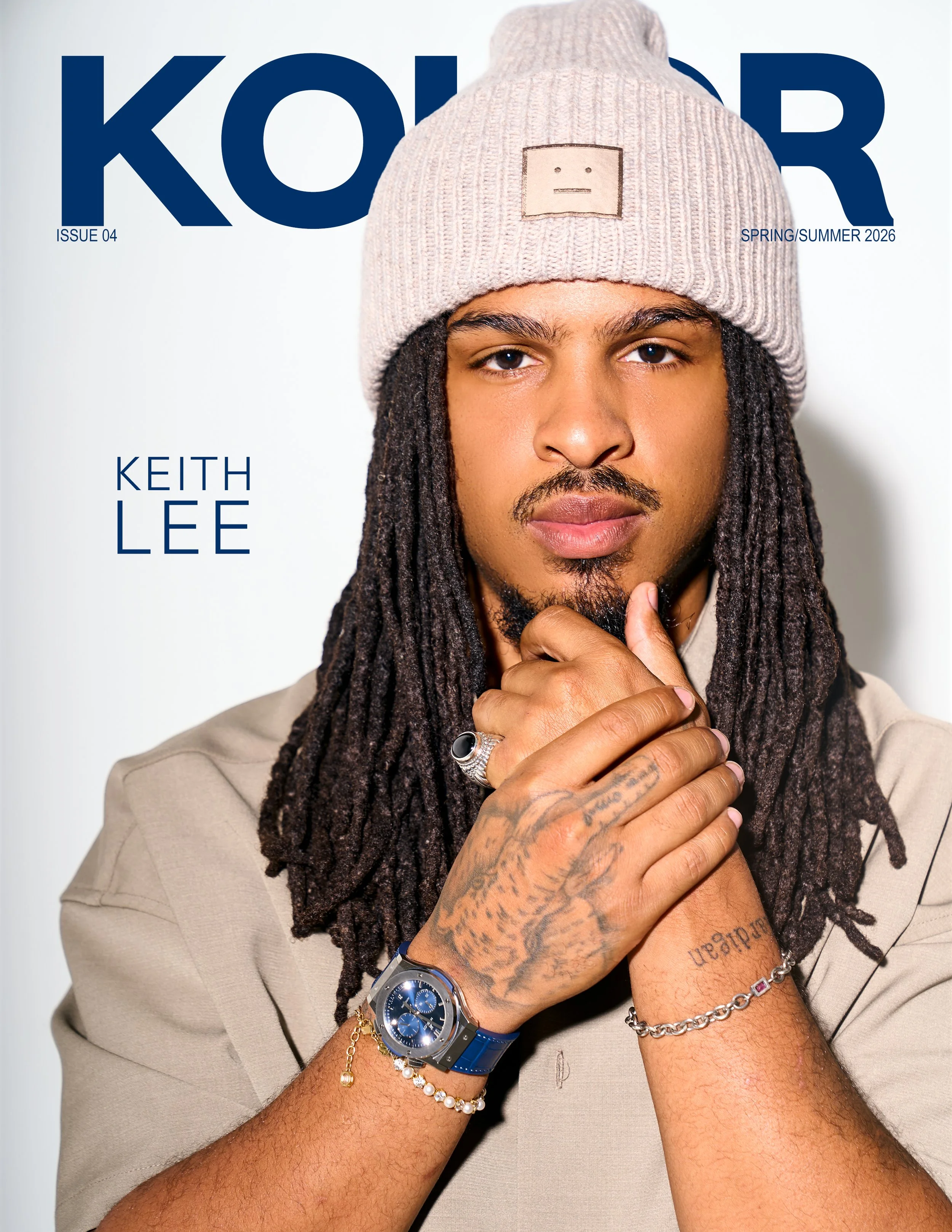
hat ACNE STUDIOS shirt & shorts ENTIRE STUDIOS socks MARNI shoes JIMMY CHOO watch HUBLOT ring GREAT FROG bracelets TITLE OF WORK
Before millions of followers, a highly anticipated Familee Day food festival, and what many now call the “Keith Lee effect,” Keith Lee was simply a man trying to find his voice. The former mixed martial artist turned food critic began posting videos as a way to cope with anxiety, eventually developing a stripped-down format: a car seat, a takeout bag, and an honest rating — “I got it, let’s try it, and rate it one through 10.” According to Eater, that simplicity is exactly what sets him apart in an increasingly overproduced content landscape. It’s raw, direct, and built on trust rather than theatrics.
The New York Times has similarly pointed to his unfiltered delivery as a defining factor in why audiences continue to believe him. That authenticity has since reshaped what food criticism looks like. With millions watching, Lee has become a driving force behind the visibility of small, often mom-and-pop restaurants — many of them Black-owned — turning quiet local spots into national conversations overnight. Coverage from outlets like Forbes and Complex has framed his rise as part of a larger shift, where influence is no longer dictated by institutions, but by individuals who build credibility in real time.
But as he tells it, “I don’t wear a mask… I don’t play a character.” Lee’s foundation remains deeply personal. In conversation with Kolor, he speaks less about influence and more about responsibility that’s grounded in faith, anchored by family, and driven by purpose. Whether he’s spotlighting a struggling business or building out his “Familee Day” festival, his mission is clear: to create spaces that feel like home. “What you see is what you get,” he says. And in a digital world full of performance, that kind of clarity might be the most powerful dish he’s serving.
Photography: Ammar Thomas
Styling: Zoe Costello
Editor-in-Chief & Interview: Nigel Isaiah
Grooming: Jathiyah Garrett’s
Photography & Production Assistant: Kaire Ryland
Styling Assistance: Trevor Stuart, Doria Alerte & Erma Lee
Location: The 9 Studios
KOLOR: First of all, how are you doing today? How’s your day been so far?
KL: Yeah, it’s been amazing. Busy, a little hectic, but it’s a blessing to be here.
KOLOR: You’ve been in New York for how long?
KL: We got to New York the day before yesterday—around 6 AM.
KOLOR: Is this your first time here?
KL: No, no, no. I’m back and forth. I come to New York a lot.
KOLOR: Do you like New York?
KL: I love New York, man. Like I said, it’s busy, it’s hectic—but it’s a place where I do a lot of business, and
the people here are amazing.
KOLOR: Your platform has grown into something much bigger than food. How do you personally
identify what you do today?
KL: I’d say it’s a mix between an unconventional food critic and somebody who just eats food—with a little
dash of a businessman in there somewhere.
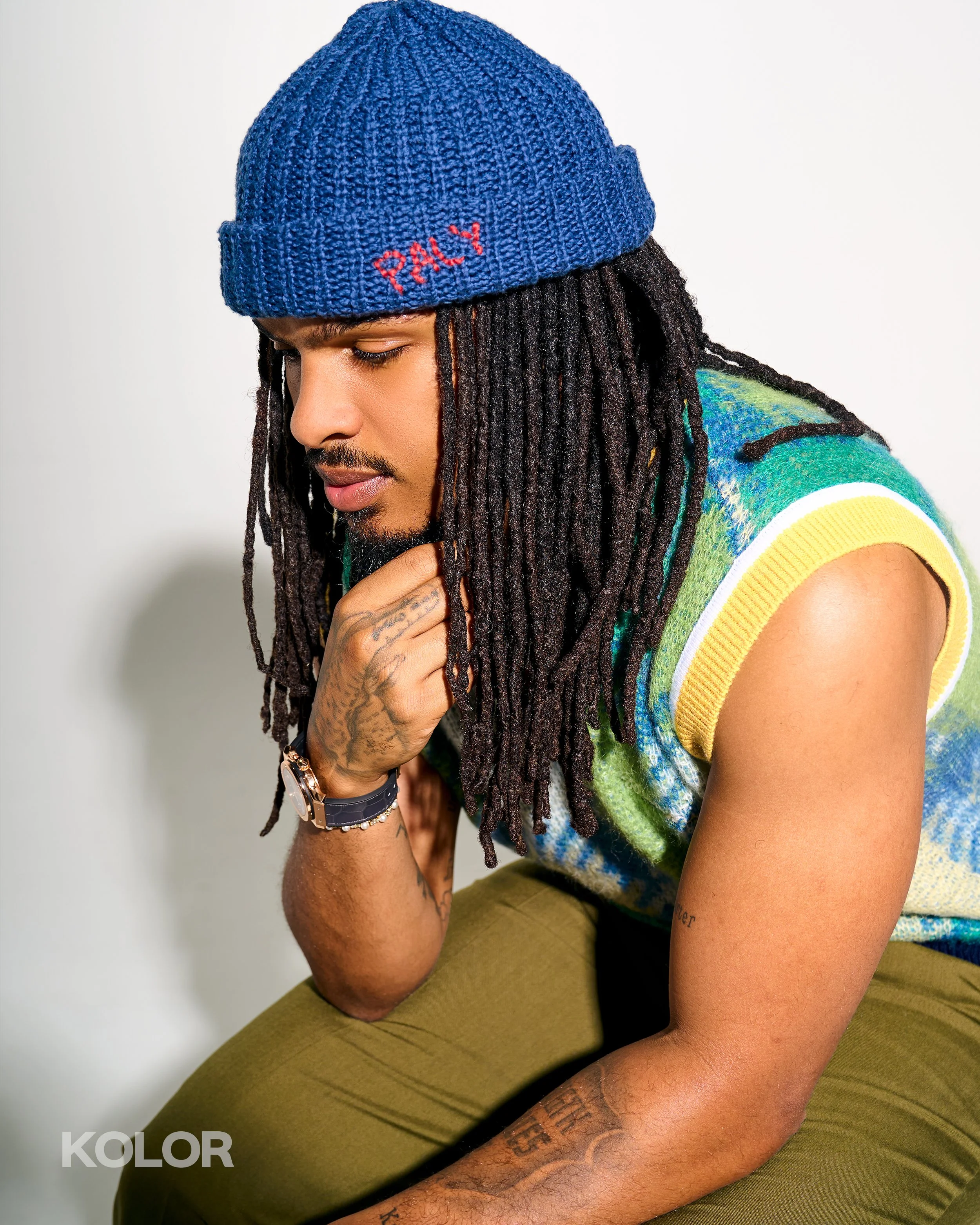
beanie PALY sweater & pants MARNI shoes JIMMY CHOO watch HUBLOT
KOLOR: There’s a level of trust people have with you that’s rare online. What do you think people
are really responding to when they watch your reviews?
KL: I don’t wear a mask. I don’t play a character that I have to turn on and off. And if you’re that kind of
person too, it’s easy to recognize that. People relate to it.
Other than that, I pray a lot. So any level of “success,” I credit to my faith in Jesus. I believe that’s what got
me here.
KOLOR: When people Google you, “American food critic” comes up. Was that ever the goal?
KL: That was never the goal. It’s a blessing to find a title in something you’re passionate about—whether
it’s given or earned. But I never set out to be known as a food critic. I was just eating food, and one step led
to the next. Now I’m, like I said, a businessman and a “food critic.”
KOLOR: What does discipline look like for you behind the scenes while building your platform?
KL: Discipline for me starts with what I eat off camera—that’s extremely important. My body is used to
eating clean and working out three or four times a day. Since I can’t always do that now, I have to really
take care of myself.
It also looks like making time for my children. They’re still at the top of my priority list—right after God andmy wife.
And it’s about not letting food become the center of everything. The real priority is my kids, my family, and
my wife.
KOLOR: You spotlight small and often overlooked businesses. Do you feel a responsibility to the
community?
KL: Absolutely. I think we’re all responsible for the communities we’re in. Communities don’t grow without
people who care.
My responsibility didn’t get bigger because of my platform—I felt this way when I had 10 followers.
Supporting local businesses is just important. You don’t need a platform to do that. You can show love to
the people around you in any way.

hat ACNE STUDIOS shirt & pants PALM ANGELS shoes JIMMY CHOO watch HUBLOT bracelets TITLE OF WORK
KOLOR: Food media spaces are becoming more diverse. Do you feel like you’re contributing to that
visibility?
KL: I feel like I’m a part of it, for sure. In the digital space, I wouldn’t call myself a pioneer, but I was there
early—especially with doing food reviews in a car.
There are people who came before me—like Daym Drops, Roll It Up K (Key Hood), and others. I’m just
blessed to be among them. I stay in my own lane, and I think when you’re truly yourself, you end up exactly
where you’re supposed to be.
KOLOR: “Familee Day” is coming up. Is it turning out the way you originally envisioned?
KL: Absolutely. The original idea was a family reunion-style cookout, and that’s exactly what it is. There’s food, music, and family.
We’ve got 10 performers—people I hand-selected to represent different generations and genres. There’sfood from all over—not just New Orleans, but places people have seen in my videos and loved.
What surprised me most is the level of support. I knew it would be successful, God willing—but I didn’t
expect this kind of turnout. People are really rallying behind it, and I’m grateful.
KOLOR: You decided to have zero vendor fees for Familee Day. What message were you trying to send?
KL: It’s just an extension of what we already do with the food tours. It’s a free marketing platform for small
businesses with great food and service that just need visibility.
I didn’t want to change who I am as a person just because I got to this level. If it’s not broken, don’t fix it. I’m
just continuing what I’ve always done.
KOLOR: Did you grow up going to family reunions? What were they like?
KL: I did. It was Black culture—cookouts, music, dancing, everybody enjoying each other.
I’m from Detroit, so there was a lot of old-school music—Frankie Beverly and Maze, The Gap Band, Charlie Wilson.
That feeling of togetherness—that’s exactly what Familee Day is about.
KOLOR: Why did you choose New Orleans for Familee Day?
KL: It was the first place we ever did a traveling food tour, and it’s still in my top three food cities in
America—right up there with Chicago.It’s always felt like home. My mom even has family ties there. It’s an epicenter of Black culture, and I’m blessed to highlight that.
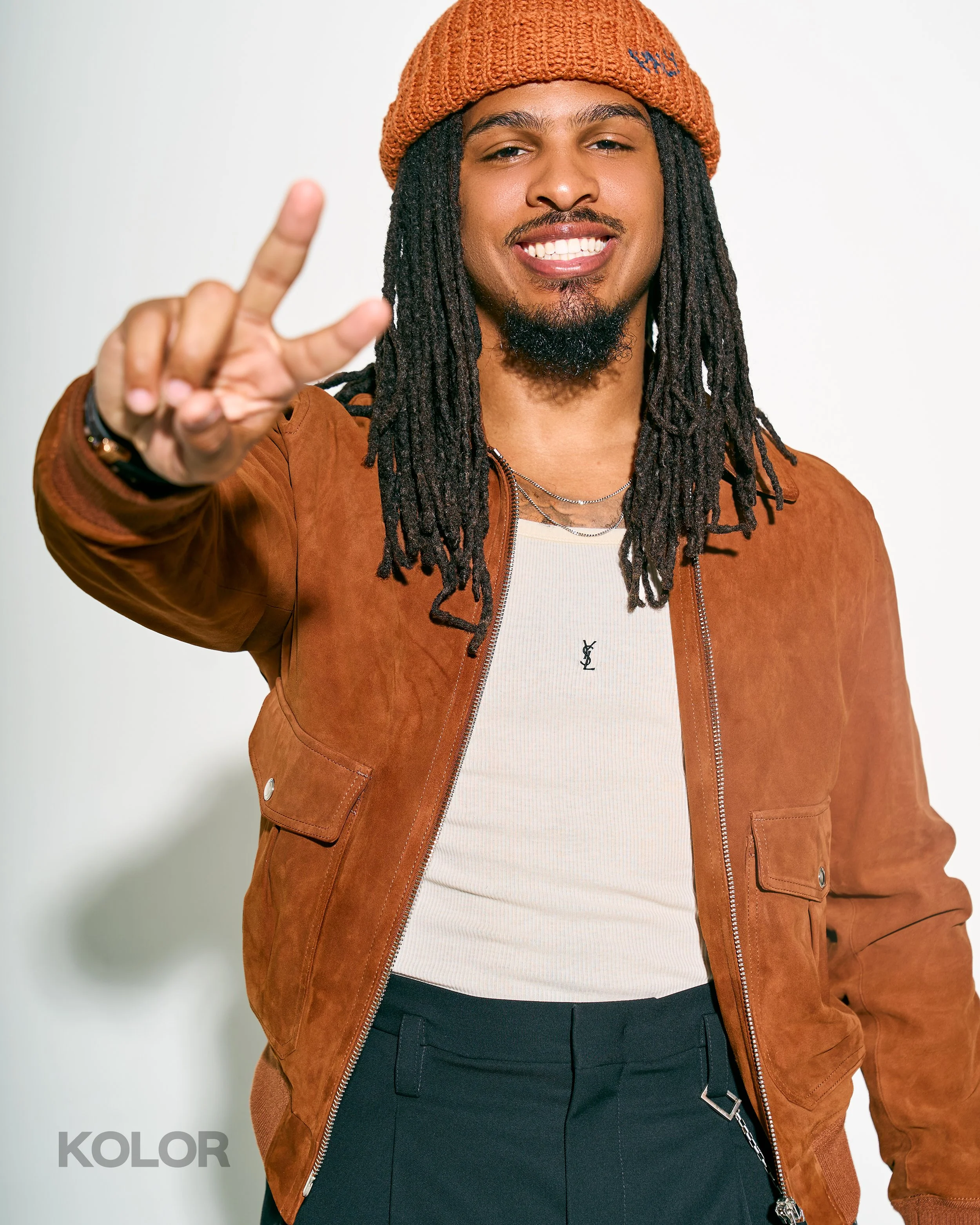
beanie PALY tank SAINT LAURENT jacket MR P BLOSOUN pants JIL SANDER wallet chain & necklace TITLE OF WORK
KOLOR: After the first Familee Day, what does success look like to you?
KL: Success looks like coming back for a second year. Expanding.
A real win would be people leaving the event already talking about next year—ready to buy tickets again.
KOLOR: There’s a lot of conversation online about marriage among Black men. What’s your
perspective?
a box.
KL: I think it’s like anything—if you feel like you’re supposed to do it, do it. Don’t do it for society or to fit into
I was blessed to find my best friend. Once we got serious, I knew she was who I wanted to build a life with.
I truly believe a man who finds a good wife finds a good thing—and I’m one of those people.
If you’re in that position, I’d say—what are you waiting for?
KOLOR: When people look back at what you’re building—from your platform to the festival—what
do you hope they understand about your impact?
KL: That it’s intentional. What you see is what you get.
Everything we’re building comes with a lot of care and a lot of sleepless nights. But I wouldn’t have it any
other way. This means a lot to me.
I believe by the end of this year—and definitely in a few years—it’ll be a real staple of who I am. I can’t wait
for people to see it.

jacket RICK OWENS tank SAINT LAURENT pants JIL SANDER watch HUBLOT wallet chain TITLE OF WORK